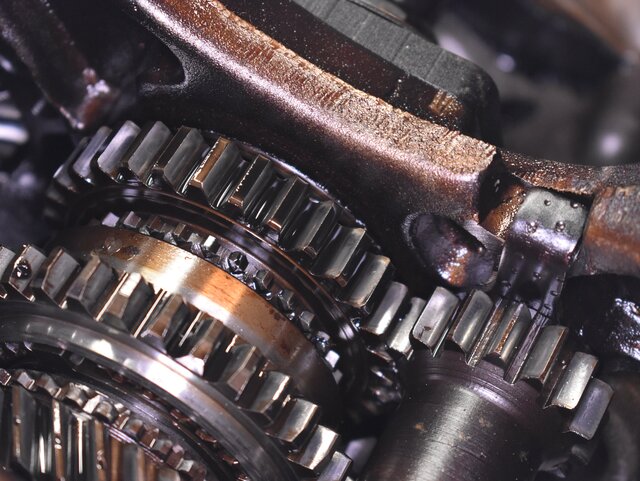

Wind Turbine Gearbox Failures: Tribology, Metallurgy, and Long-Term Solutions

Wind energy has become one of the fastest‑growing sources of renewable power worldwide, with turbines designed to operate for a service life of 20 to 25 years. Yet, in practice, the gearbox, one of the most critical subsystems, consistently falls short of this expectation.
Instead of lasting the full design life, gearboxes frequently require major refurbishment or outright replacement within 7 to 10 years, posing a significant challenge to the economics and sustainability of wind power.
The financial impact of gearbox failures are significant. Replacement costs are typically estimated between $250,000 and $300,000 per event, yet even this estimate excludes the additional expenses of crane mobilisation, logistics, and lost revenue from downtime.
For operators managing large fleets of turbines, these costs accumulate rapidly, eroding the competitiveness of wind energy against other power sources. Gearbox reliability is therefore a central factor in the long‑term viability of wind as a mainstay of the energy transition.
This article will investigate the source of gearbox failures, the role of lubrication, metallurgical solutions, and the long‑term strategies needed to close the reliability gap in wind energy.
What are the failure modes of wind turbine gearbox?
The answer lies in tribology - the science of friction, wear, and lubrication.
Studies have found that approximately 70% of gearbox failures are attributed to bearing issues, and of those, nearly 90% are linked to lubrication or tribological failures.
This highlights the importance of lubrication regimes, surface interactions, and material behaviour in extending the life of a gearbox.
Ultimately, failures are rarely the result of a single factor. They emerge from complex interactions between mechanical stresses, lubricant chemistry, and metallurgical properties.
Wind turbine gearboxes are exposed to complex loading conditions, variable operating environments, and long duty cycles. These factors combine to produce a range of tribological and metallurgical failure modes. Understanding these mechanisms is essential for improving reliability and guiding both design and maintenance strategies.
Micropitting (surface fatigue)
Micropitting is a phenomenon that occurs when the lubricant film between mating surfaces is insufficient to fully separate them.
This condition is often described in terms of a low lambda ratio, where the film thickness is inadequate relative to surface roughness. Under rolling and sliding contacts, asperity peaks break through the lubricant film, causing localised shear stresses.
Over time, these stresses lead to micro‑spalling and the formation of small pits on the surface. Although each pit is microscopic, their accumulation alters surface geometry, increases roughness, and accelerates further wear.
Micropitting is particularly problematic in wind turbine gearboxes due to the combination of high loads and variable operating speeds.
Scuffing (adhesive wear)
Scuffing is a severe adhesive wear mechanism that is characterised by rapid plastic deformation and material transfer between surfaces. It occurs when the lubricant film collapses under high frictional heating, leaving surfaces in direct contact.
Transient loads, roller skidding, and frequent start‑stop cycles are typical triggers, and are all common in wind energy. Once scuffing begins, the affected surfaces exhibit scoring and roughness, which further disrupts lubrication and accelerates damage.
Scuffing is often catastrophic, leading to rapid component failure if not detected early.
White Etching Cracks (WEC) and Irregular White Etching Areas (IrWEA)
Among the most debated failure modes in wind turbine gearboxes are White Etching Cracks (WEC) and Irregular White Etching Areas (IrWEA).
These are subsurface cracks bordered by microstructural alterations that appear white under a microscope. Their occurrence has been widespread in modern turbines, yet their causes remain unclear. Currently, several hypotheses exist:
- Hydrogen embrittlement suggests that lubricant decomposition releases hydrogen, which diffuses into the steel and causes localised plasticity and cracking.
- Mechanical stress theories argue that high sliding friction or impact loading drives subsurface shear stresses, initiating cracks mechanically.
- Combined factors suggest that electrical currents, lubricant chemistry, and mechanical loading interact to produce the phenomenon.
Regardless of the precise mechanism, WEC failures are particularly damaging because they can occur unexpectedly and progress rapidly, often well before the expected fatigue life of the bearing.
Additional failure modes
Beyond micropitting, scuffing and WEC, there are several other mechanisms that can contribute to gearbox unreliability:
- Fretting corrosion arises in spline connections and bearing seats, where relative micro‑movements occur between components in compression (also where interference fits exist). These movements cause breakage of surface asperities generating debris and stress concentrations, which accelerate wear and reduce fit integrity.
- Brittle fracture can occur under extreme overload conditions or due to material defects. Though rare, when it does occur, it is catastrophic, leading to sudden component failure.
- Electrical current damage is increasingly recognised in modern turbines. Stray currents passing through bearings cause fluting and surface degradation.
These failure modes illustrate the complexity of gearbox reliability. They are not isolated phenomena, but frequently interact, with one mechanism accelerating another.
The effect of lubrication
Lubrication in wind turbine gearboxes is not merely a consumable that needs to be replaced periodically. It is a critical machine element that directly determines the reliability and longevity of the gearbox.
The role of lubricant extends beyond reducing friction to the protection of surfaces from wear, corrosion, all while dissipating heat generated during operation.
The physical mechanisms of lubrication failure are well understood. Under high loads and variable speeds, shear stresses can thin the lubricant film, reducing its ability to separate surfaces.
Centrifugal forces can strip lubricant from critical contacts, particularly in high‑speed stages of the gearbox. Once the film collapses, asperities interact directly, leading to micropitting, fretting, scuffing, and accelerated fatigue.
Chemical degradation is another route to failure. Oxidation of the base oil and depletion of additives reduce the lubricant’s protective properties. This process generates sludge and acids, which corrode metal surfaces and impair flow through filters and channels.
Additive chemistry is therefore crucial. Anti‑wear agents, antioxidants, and extreme‑pressure additives need to be carefully balanced to provide long‑term stability without introducing side effects such as deposit formation.
Yet the complications don’t end there. Contamination is a persistent challenge in wind turbine gearboxes. Water ingress, often from condensation or seal leakage, acts as a catalyst for oxidation and reduces film strength.
Solid particles, be it from wear debris or external sources, create abrasive conditions that accelerate surface damage. Effective filtration and monitoring are essential to control contamination, but the lubricant itself must also be formulated to tolerate a degree of water and particle presence without catastrophic loss of performance.
Different components within the turbine require tailored lubrication strategies. Pitch and yaw bearings regularly rely on grease formulations, which provide adhesion and protection in oscillating motion. By contrast, the main gearbox demands high‑performance oils capable of maintaining viscosity across a wide temperature range.
Synthetic oils are increasingly favoured for their superior viscosity index, thermal stability, and extended service life. These properties allow them to maintain film thickness under fluctuating loads and temperatures, reducing the risk of tribological failure.
How is the industry solving this problem?
The reliability of wind turbine gearboxes is not determined solely by lubrication and tribology.
The metallurgical quality of steels and the engineering of surfaces play a decisive role in resisting fatigue, wear and crack initiation. Advances in materials science and finishing techniques have therefore become central to extending gearbox life.
One of the most effective strategies has been the development of cleaner steels. By reducing non‑metallic inclusions, manufacturers minimise the microscopic stress concentrations that act as initiation points for fatigue cracks.
Cleaner steels provide a more uniform microstructure, which in turn improves resistance to rolling contact fatigue and delays the onset of micropitting and white etching cracks. The production of such steels requires stringent control of smelting and refining processes, but the benefits in terms of reliability are significant.
Surface coatings offer another layer of protection. Black oxide treatments applied to bearing surfaces reduce traction stresses and mitigate hydrogen diffusion, which is particularly relevant in addressing white etching crack phenomena. They also assist during the run‑in period by providing a more forgiving surface condition.
Diamond‑like carbon (DLC) coatings present a more advanced solution. These hard, low‑friction coatings resist scuffing and micropitting even under poor lubrication conditions. Their ability to maintain surface integrity under extreme loads makes them attractive for critical components in wind turbine gearboxes.
Super‑finishing techniques further increase performance by improving surface topography. Traditional grinding leaves directional marks that act as stress concentrators and reduce the effectiveness of lubricant films.
Isotropic super‑finishing removes these marks, producing a smoother, non‑directional surface. This improves the lambda ratio (the relationship between film thickness and surface roughness) and significantly reduces the risk of micropitting.
Together, these changes offer hope to an industry with great potential for renewable energy, yet they are but one facet of this complex dilemma that needs to be considered.
While lubrication and metallurgy address the immediate mechanisms of wear and fatigue, the architecture of the gearbox determines how loads are distributed and how stresses accumulate over time.
Gearbox design and load spectrum considerations
The design of a wind turbine gearbox has a direct bearing on its tribological performance and long‑term reliability.
One of the most important design choices is between planetary and parallel shaft gearboxes. Planetary designs are widely used in wind turbines because they allow compact layouts and efficient load sharing across multiple planet gears. However, they also introduce complex load paths and higher sensitivity to misalignment.
Parallel shaft gearboxes offer simpler geometry, but can be bulkier and less efficient in terms of weight and space. The choice of design needs to balance efficiency, manufacturability, and the ability to manage tribological stresses.
Gear geometry too must be factored in when determining contact conditions. Optimised tooth profiles reduce sliding friction and distribute loads more evenly, lowering the risk of micropitting and scuffing.
For example, helical gears provide smoother engagement than spur gears, but they also generate axial forces that must be managed through bearing design. Therefore, the interaction between gear geometry and bearing arrangement is key to achieving reliable performance.
Drivetrain architecture also influences tribological stress. The integration of the gearbox with the main shaft, generator, and support structures determines how loads are transmitted and where misalignments occur. Flexible couplings, torque arms, and bearing arrangements must be designed to minimise misalignment and vibration, both of which exacerbate wear.
Transient loads are a vital component of wind turbine operation. Start‑stop cycles, grid disturbances, and torque spikes impose sudden stresses on gear teeth and bearings. These events can collapse lubricant films, trigger scuffing, and accelerate fatigue.
Effective gearbox design needs to account for all of these elements, incorporating safety margins and damping mechanisms to absorb shocks without transferring excessive stress to critical components.
The relationship between detection and mitigation
The table below outlines the numerous failure modes, how they present, and what can be done to mitigate them:
Failure mode | Detection methods | Mitigation strategies |
Micropitting | Vibration analysis (late stage), oil debris sensors (early wear particles), surface inspections | Super‑finishing to reduce roughness, improved lubricant film thickness, optimised gear geometry |
Scuffing | Sudden vibration spikes, thermal monitoring, visual inspection of gear teeth | High‑performance lubricants with EP additives, DLC coatings, improved cooling and load management |
WEC / IrWEA | Difficult to detect early, vibration analysis often too late, metallurgical analysis post‑failure | Cleaner steels, black oxide coatings, lubricant chemistry control, electrical insulation of bearings |
Fretting corrosion | Visual inspection of spline connections, vibration signatures from looseness | Improved fits and tolerances, anti‑fretting coatings, controlled micro‑movements, better assembly practices |
Brittle fracture | Detected only after catastrophic failure | Use of defect‑free steels, conservative design margins, overload protection systems |
Electrical current damage | Bearing fluting detected via vibration, electrical discharge monitoring, oil debris sensors | Insulated bearings, grounding devices, improved converter design, lubricant additives to resist electrical effects |
The long‑term solutions to gearbox failure
Improving the long‑term reliability of wind turbine gearboxes requires more than incremental changes to existing practices. It demands a forward‑looking approach that combines advanced lubrication technologies with rigorous reliability analysis.
Next‑generation lubricants
Traditional mineral and synthetic oils have served the industry well, yet their limitations are increasingly apparent under the demanding conditions of wind turbine operation.
Research into advanced lubricants has focused on additives that enhance film strength, reduce friction, and resist degradation:
- Nano‑additives such as boron or carbon‑based nanoparticles are being developed to form protective boundary films. These films reduce direct asperity contact, lowering friction and wear even when the hydrodynamic film is compromised. Their ability to self‑assemble at the surface provides resilience under transient loads and start‑stop cycles.
- Ionic liquids can be used as additives to significantly reduce wear and friction coefficients. The chemical stability and low volatility of these “green” solvents make them well suited to the wide temperature ranges encountered in wind turbine gearboxes.
Reliability analysis methods
Reliability analysis methods provide the groundwork for quantifying the benefits of tribological improvements.
Traditional Failure Mode and Effects Analysis (FMEA) has been widely used, but it often underestimates the economic impact of tribological failures because it treats them as isolated events.
However, Fault Tree Analysis (FTA) offers a more advanced approach. By incorporating specific tribological factors into the analysis, FTA can model the probability of cascading failures and their economic consequences.
A case study on a 2.5 MW turbine found that FTA predicted a potential 14.96% saving in annual failure costs, approximately $13,470 per turbine per year, through just a 10% improvement in tribological reliability.
This contrasts with FMEA, which failed to capture the full economic benefit of such improvements. Thus, reliability analysis needs to evolve to reflect the complexity of tribological interactions.
Managing gearbox reliability
Condition monitoring has become one of the most important tools for managing gearbox reliability in wind turbines. Failures are rarely sudden, instead tending to develop over time through mechanisms such as micropitting, scuffing, or white etching cracks. Detecting these processes early allows for intervention before damage becomes catastrophic.
Vibration analysis remains the industry standard for detecting gearbox damage. It is effective at identifying late‑stage faults such as bearing defects or gear tooth damage, but its sensitivity to early lubrication failures is limited. By the time vibration signatures are clear, significant wear has often already occurred.
Oil debris and quality sensors are able to provide a more proactive approach, monitoring parameters such as particle counts, moisture levels, and dielectric constant, to offer real‑time insight into lubricant condition.
A rise in metal particles can indicate wear long before vibration analysis detects it, while changes in dielectric constant can reveal oxidation or additive depletion. Together, these sensors provide a window into the health of both the lubricant and the components it protects.
The integration of multiple monitoring technologies is increasingly seen as essential. Vibration analysis, oil quality monitoring, and temperature sensors each provide partial information. Combined, they can create a more complete picture of gearbox health, allowing for predictive maintenance strategies that extend service life.
Research and methodology change
While advancements in technology have improved the ability to monitor and analyse gearbox health, several gaps remain.
Current test methodologies often fail to replicate field failures, particularly white etching cracks. Laboratory tests do not always capture the complex interactions of load, lubrication chemistry, and electrical currents present in real turbines. Therefore, developing test methods that accurately mimic these conditions is a priority for future research.
Another area of need is the integration of tribology expertise into the design phase. Too often, tribological considerations are treated as operational issues to be managed after deployment, rather than an opportunity to negate issues outright.
By involving tribology specialists early in gearbox design, manufacturers have the chance to anticipate failure mechanisms and design components that are inherently more resistant. This shift from reactive fixes to proactive reliability is essential if wind energy is to close the reliability gap.
Condition monitoring will continue to evolve, but its effectiveness depends on pairing technology with deeper understanding of failure mechanisms.
The future lies in systems that not only detect damage but also explain its origins, guiding both immediate maintenance and long‑term design improvements.
What does the future hold for gearbox integrity?
While wind turbines have met their fair share of criticism, which in turn has lessened widespread adoption, the future of the technology, and in turn gearbox integrity, remains promising.
Digitalisation is reshaping how gearbox reliability is managed. Traditional monitoring and maintenance strategies are now being augmented by simulation tools, machine learning, and data integration platforms that allow operators to anticipate failures rather than simply react to them.
Digital Twin technology
A digital twin is a virtual model of a physical gearbox that mirrors its behaviour under real operating conditions.
By incorporating load spectra, lubrication regimes, and material properties, digital twins can simulate how the gearbox responds to variable stresses over time, thus enabling predictive maintenance.
Digital twins also allow design engineers to test new configurations against realistic operating scenarios, reducing the gap between laboratory performance and field reliability.
AI and machine learning applications
Artificial intelligence and machine learning are increasingly applied to all facets of the modern world, and gearbox monitoring is no different.
Algorithms trained on vibration signals, oil analysis results, and temperature profiles can detect the subtle anomalies that precede failure, often long before a serious issue occurs.
Unlike traditional threshold‑based systems, machine learning models adapt to the specific behaviour of each turbine, improving sensitivity to early‑stage damage. This approach is particularly valuable for identifying lubrication breakdowns and white etching crack precursors, which often escape conventional detection methods.
Standardisation needs
However, despite progress, there are gaps in international standards. Current IEC and ISO testing protocols do not fully replicate tribological failures such as white etching cracks.
As a result, laboratory validation of new materials, coatings, and lubricants may not reflect field performance - a significant issue for determining validity. Standardisation of test methods that capture these complex failure mechanisms is essential to ensure that digital models and AI systems are grounded in realistic data.
Digitalisation and AI are not replacements for tribology and metallurgy. Instead, they should be seen as complementary tools. By combining advanced monitoring with predictive modelling, the industry can move towards a proactive reliability culture, where failures are anticipated and prevented rather than endured.
Wind energy engineering and mechanical failure services
Improving gearbox reliability goes beyond understanding tribology and metallurgy to applying that knowledge in practice.
Every investigation into a failure should be seen as an opportunity to strengthen systems, and embed lessons that deliver lasting performance. This is the philosophy that guides Neale Consulting Engineers.
As part of Brookes Bell, Neale Consulting Engineers brings together a broad spectrum of expertise, including metallurgists, tribologists, mechanical engineers, non‑destructive testing specialists, and coating experts.
This multidisciplinary approach ensures that findings are not only technically rigorous but also actionable, supporting both corrective measures and long‑term reliability improvements.
Whether the requirement is a root cause investigation, support with reliability methodologies such as FMEA or DFMEA, or guidance on embedding best practice into maintenance systems, our experts provide clear, accurate, and practical solutions.
Learn more about our wind energy services, or contact our team today to discuss how we can support you.
Contact Neale Consulting Engineers today
What is Tribology? | Transforming Tribology With AI | The Greenwood-Williamson Theory is Reshaping Surface Science
- Author
- Andrew Yarwood
- Date
- 22/12/2025