
The Milliseconds That Win Medals: How Tribology Shapes Olympic Ski Racing
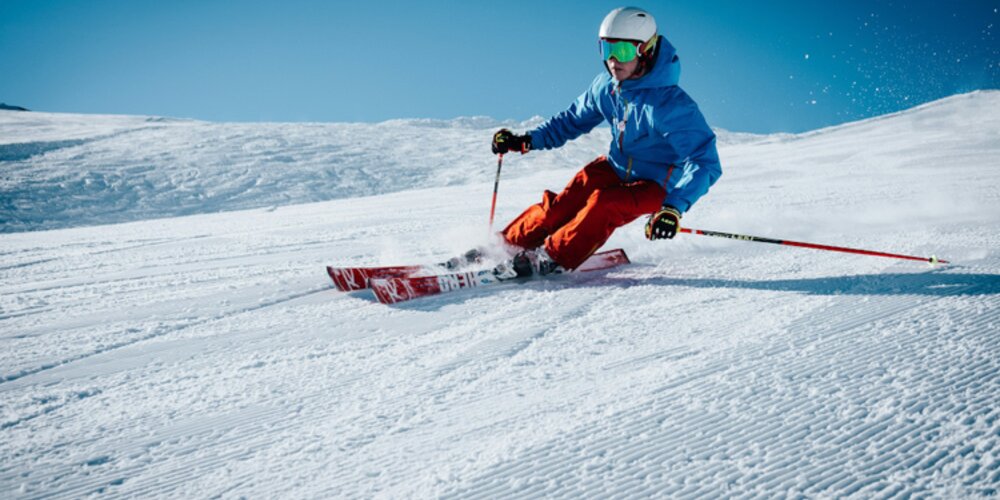
At the startline in Cortina stands a skier. Their success depends on a mix of athleticism, skill - and a little bit of science known as tribology. Tribology - the science of friction, wear, and lubrication - is the largely unheard of discipline that is making a huge contribution to Olympic skiing. Find out more about this contribution in this article from the Neale Consulting team…
What is tribology?
Let’s begin things with a definition. What exactly is tribology?
Put simply, it’s the science of interacting surfaces in motion - in plainer terms - the study of friction, wear, and lubrication.
In skiing, tribology is the lens through which we understand why one ski glides faster than another; tiny processes at the ski-snow interface (how surfaces touch, how they abrade, and whether a microscopic water film forms) control overall drag and wear.
Think of a ski in the following terms: the ski base texture and wax determine how melt-water and snow grains behave under the runner. It’s this microscopic behaviour that directly affects speed and energy loss on a race run.
How ski-snow friction works: the three main mechanisms
When an athlete is skiing they are participating in three main tribological mechanisms. We’ve detailed these mechanisms below.
Adhesive friction
The first tribological mechanism that comes into play during skiing is ‘adhesive friction’.
Adhesive friction works as follows:
- When a ski slides over snow, frictional heating (plus ambient solar radiation), can melt a microscopic layer of water at the contact interface.
- This thin layer of water will behave as a lubricant, reducing direct solid-to-solid contact and lowering resistance.
- However, this only works up to a point. As the liquid grows in volume, capillary forces and viscous drag can build - leading to an increase in overall friction, thus slowing the skier down.
In short, there are potential performance gains to be had for ski designs that balance melt-generated lubrication and the viscous penalties of too much water.
Ploughing effects
Snow is not a perfectly smooth partner; hard grains and embedded debris abrade the ski base. Ski bases are typically made from ultra-high-molecular-weight polyethylene (UHMWPE) because it resists wear and keeps a low friction coefficient.
However, repeated use can result in the build up of micro-abrasions that raise drag.
As such, stone-grinding and timely base repair can help to mitigate these abrasions. Again, this can be a potential performance advantage.
Load and contact mechanics
It’s important to note that only a fraction of the ski base comes into contact with snow. The contact area of a ski is influenced by factors such as skier weight, camber, stiffness, and snow hardness.
Should a ski have a higher contact area, then this can concentrate stresses and increase ploughing and adhesive contact - slowing everything down. Likewise, a tuned camber and correct shoe-ski setup can help spread loads and thus reduce the contact area and resulting pressure.
Wax: what it is, and how it decides races
An oft overlooked factor in skiing is wax - or, more precisely - the type of wax and how it is applied.
Wax acts as a thin layer of material between the ski base and the snow so that the ski either glides (glide wax) or grips (grip wax/klister).
These two wax types act as follows:
- Glide wax repels water and reduces sliding friction.
- Grip wax increases friction in a controlled way.
Within these two types of waxes, there are a variety of sub-types, with types being selected based on snow temperature, snow crystal type, humidity, and the expected duration and speed of the run.
How wax is applied to skis
The way in which wax is applied to skis can have important tribological implications. Whilst there are nuances and slight differences between teams/individual athletes, the application process is generally as follows:
- Snow sampling and decision: samples are made of surface snow as well as notes being made of air temperature and humidity.
- Hot waxing: the majority of race glide waxes are melted onto the base of skis using a hot iron. Any excess wax is then scraped and brushed from the ski base.
- Scratch/klister: at this point, grip wax (also known as klister wax) is applied to classic ‘grip zones’ on the ski base.
- Field testing: once the wax has been applied, the skis will be field tested, with changes made accordingly.
Measuring friction: the instruments and tests that guide wax choices
So, how do teams decide what waxes to apply? They don’t guess - they measure. More specifically, they use tribometers - devices that measure friction, wear, and lubrication performance.
These tribometers typically take one of two forms:
- Laboratory rigs: these allow teams/researchers to isolate wax or base-material effects.
- On-snow systems: portable systems capture real-world data such as snow microstructure, temperature, and speed.
Ultimately - at the risk of oversimplifying - these tribometers quantify the ski-snow coefficient of friction (µ).
This is important as small changes in friction (µ) can result in significant performance gains. In fact, studies have suggested that a reduction of about 0.001 in (µ) can correspond to ~1.6-2 seconds per kilometre saved.
Other performance factors: edges, wear and control
Whilst speed is key in skiing - and that all-important podium place - there are other important factors that can influence overall performance: namely, edges, wear, and control.
Take the ski edge, for example. A sharp, correctly-bevelled edge will cut into compact snow and create a clean contact surface, facilitating tighter, faster turns. Likewise, wear - such as burrs and nicks - within the ski edge or surface can impede speed and induce friction.
Conclusion: tribology matters!
As the example of Olympic skiing demonstrates, tribology is the often-overlooked science that can generate real-world results.
And, it’s not just in the realm of skiing that the application of tribological principles can bring benefits. As we can attest here at Neale Consulting Engineers, tribology can yield significant savings and efficiency gains in the fields of marine, power generation, wind energy, oil and gas, manufacturing, rail and more.
Contact us today and find out how we can help your business
For more information, news and insight into tribology, explore the Neale Consulting blog…
When to Instruct an Expert Witness: A Practical Guide for Solicitors and In-House Counsel | Wind Turbine Gearbox Failures: Tribology, Metallurgy, and Long-Term Solutions | Researchers Battle to Preserve Wind Turbine Gearboxes From White Etching Cracking
- Author
- Andrew Yarwood
- Date
- 20/02/2026