
Rail Tunnels to Become Renewable Tunnel Wind Power Stations
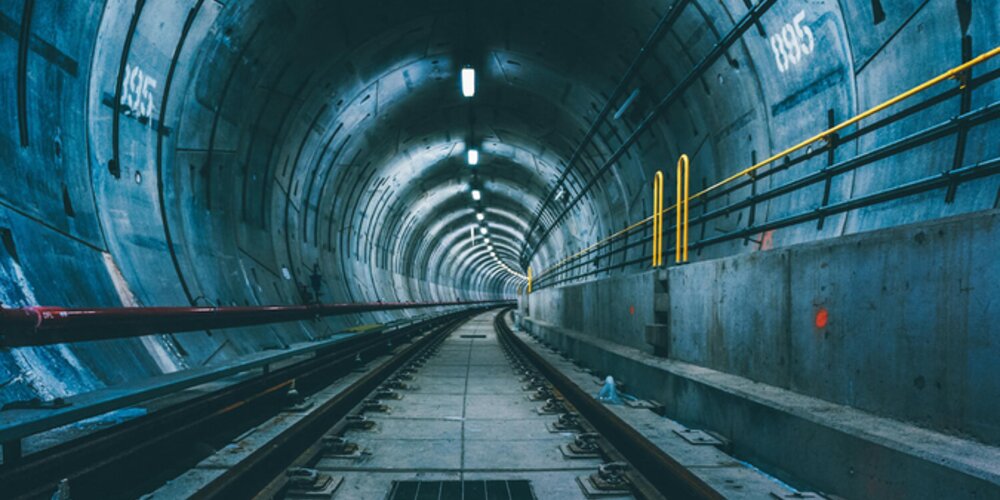
A University of Manchester project will test vertical‑axis wind turbines that harvest the airflow generated by trains, aiming to turn railway tunnels into distributed renewable energy sources.
A research team from the University of Manchester’s Department of Mechanical and Aerospace Engineering, working with Manchester consultant Q-Sustain Limited, has launched an EPSRC-funded programme to design vertical-axis wind turbines (VAWTs).
These turbines extract energy from the airflow produced by trains passing through tunnels, a phenomenon known as the piston effect.
The initiative will begin with feasibility work linked to the Transpennine Route Upgrade. It aims to demonstrate how wasted aerodynamic energy can be integrated into transport infrastructure, potentially delivering low‑carbon electricity to rail sites and the wider grid.
Project partners say the approach could be scaled to other tunnel networks if prototypes prove successful.
Researchers have already modelled tunnel airflow and turbine coupling using the bespoke VerXis Wind software platform and completed techno‑economic analysis work to assess commercial viability.
“Our VerXis toolkit represents a leap forward in renewable energy research. By turning minimal tunnel geometry and schedule data into bank-level economic indicators in minutes, we're bridging the gap between academic innovation and real-world deployment, making piston-wind VAWTs not just technically viable, but genuinely investable,” said Project lead, Dr Amir Keshmiri.
“What excites us most about VerXis is its ability to rapidly test and scale turbine designs tailored to each tunnel environment” said Q‑Sustain’s industrial lead, Azhar Quaiyoom. “This toolkit enables smarter, data-driven decisions, helping us deploy sustainable solutions in railway infrastructure that align with the UK's net-zero ambitions and calculates the return on investment for our clients”.
The next phase of the programme is to build and trial prototype VAWTs in operational tunnel sections, with on‑site testing intended to validate aerodynamic performance, durability, and maintenance regimes under real rail conditions.
If proven, piston‑wind turbines could offer multiple benefits, including local generation reducing grid draw at substations, lower operational carbon for railways, and a new revenue stream for infrastructure owners.
The team and industry partners stress that technical and commercial hurdles remain, notably integration with signalling and safety systems, turbine survivability under high particulate and vibration loads, and the need to align maintenance windows with rail operations.
Beyond the Transpennine trial, the researchers envisage applying the concept to other transport corridors and tunnelised infrastructure, presenting a potential model for distributed renewables that use existing public assets rather than new land take.
Rail engineering and mechanical failure services at Neale Consulting Engineers
Engineering has many wide-reaching applications within the rail industry. But, the key to successfully applying engineering and mechanical failure principles in rail settings is to choose a consultancy that has relevant rail experience.
Part of the Brookes Bell group, Neale Consulting Engineers is the ‘go-to’ consultancy for tribology and wider engineering understanding for rail networks and train operators across the globe.
Our wider team includes metallurgists, materials scientists, engineers, NDT technicians and paint and coatings specialists, all on hand to provide you with the most in-depth possible advice.
To find out how Neale Consulting Engineers can help, contact us today.
Learn more about our rail engineering services
Plans Announced to Develop UK’s Largest Offshore Wind Manufacturing Hub | Saipem Wins €520m Liverpool Bay Carbon Capture Project Contract | Researchers Battle to Preserve Wind Turbine Gearboxes From White Etching Cracking
- Author
- Andrew Yarwood
- Date
- 14/11/2025